After Hamas
Why Washington Is Finally Choosing Reality Over Illusion

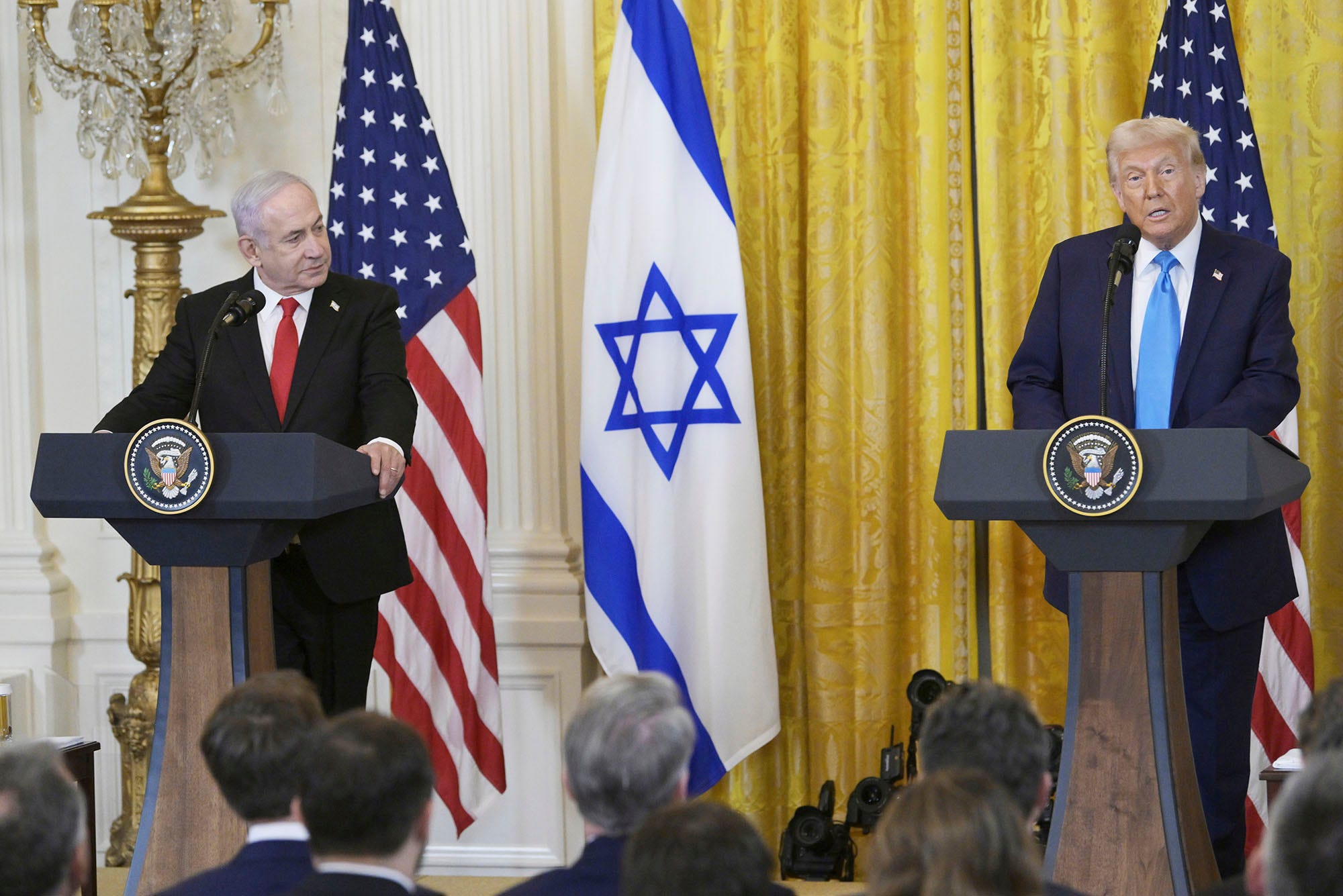
For decades, the international community has clung to a comforting but deadly illusion: that Israeli-Palestinian peace would somehow emerge from endless conferences, symbolic resolutions, humanitarian rhetoric, and billions in misused aid. This narrative has protected killers, excused corruption, and trapped civilians on both sides in a perpetual cycle of violence. What is now taking shape around Gaza represents a sharp break from that tradition of self-deception. For the first time in years, Washington is no longer speaking the language of abstract peace but that of concrete governance, enforceable security, and political responsibility. The message, even when diplomatically softened, is unmistakable: Gaza cannot be rebuilt as long as Hamas exists as a military and ideological force, and the Palestinian Authority has neither the legitimacy, the credibility, nor the capacity to take control of a territory it long ago surrendered to Islamist militias, institutional corruption, and a culture of martyrdom. This is not an ideological pivot but a pragmatic one. It is rooted not in hope, but in experience. Every time the world tried to accommodate terrorism, it was interpreted as weakness. Every time incitement was tolerated, the next massacre was already being prepared. Every time governance was entrusted to failed Palestinian structures, war against Israel was indirectly financed. The current American approach signals an overdue refusal to repeat that cycle.
What is emerging is not a romantic vision of Palestinian statehood nor a recycled leadership masquerading as reform, but a deliberately limited and tightly supervised transitional framework. A technocratic administration, stripped of factional loyalties and armed ideology, is being designed as a temporary tool with a narrow mandate: restore basic services without diversion, rebuild infrastructure without tunnels, and manage civilian life without glorifying death. This model clashes with long-standing diplomatic dogma because it refuses to sanctify fictional sovereignty or reward victimhood narratives. It begins with a premise many still resist: there can be no reconstruction where a terrorist organization retains weapons, propaganda, and a genocidal worldview. Disarmament is not a moral aspiration; it is a functional necessity. And contrary to years of wishful thinking, that disarmament cannot be entrusted either to Hamas itself or to the Palestinian Authority, which has never disarmed anyone and continues to incentivize violence financially and politically. In this sense, the American initiative finally acknowledges a truth long denied: peace does not emerge from compromise with Islamist ideology, but from its strategic defeat.
For Israel, this shift is nothing short of pivotal. It retroactively validates what the Jewish state has argued for years, often at the cost of diplomatic isolation: this conflict is not primarily about borders, but about existence. As long as Gaza was ruled by an entity whose founding purpose is Israel’s destruction, no ceasefire could hold, no reconstruction could be sincere, and no negotiation could be meaningful. By assuming direct oversight and sidelining both Hamas and the Palestinian Authority, Washington is implicitly admitting the failure of past frameworks that confused humanitarian management with strategic surrender. This path is not without risks, but it is far less dangerous than perpetuating a lie. It sends a clear signal across the region: the United States is no longer willing to purchase short-term calm at the price of long-term radicalization. Instead, it is backing a security architecture that protects Israel, prevents the re-emergence of terrorist networks, and finally offers Palestinian civilians an alternative to perpetual sacrifice. If carried through to its conclusion, this approach could mark the first serious step toward a genuine peace, one stripped of slogans, ritualized outrage, and weaponized corpses. Gaza will not be saved by speeches. It will only be saved by the end of Hamas, the dismantling of the Palestinian Authority as it currently exists, and the firm assertion that violence is no longer an acceptable political currency.